Can you get a truck loan as a subbie without full financials?
Yes. A truck loan without full financials is a standard product for subbies with an ABN. Lenders read the evidence a working operator already has: ABN and GST history, business bank statements, BAS, and the truck itself. Here is what they accept, what it unlocks, and how to set it up.
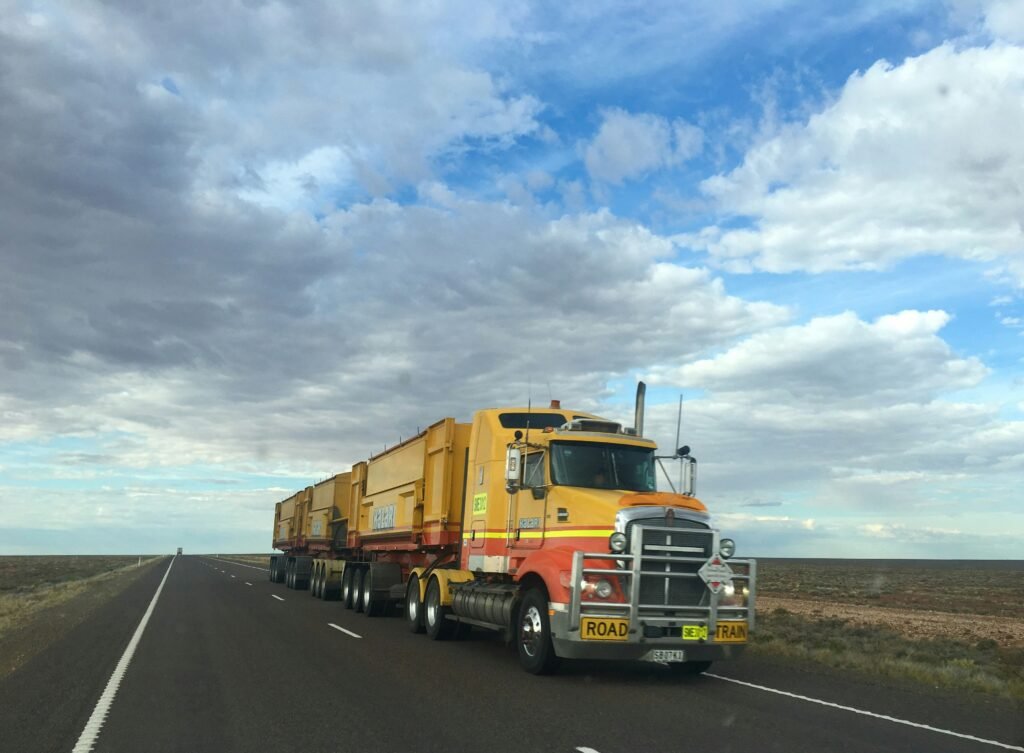
Short answer: yes, and for most subbies it is the normal way a truck gets financed, not the exception. A truck loan without full financials is a business loan assessed on evidence other than tax returns and profit and loss statements. The evidence is the stuff you already have. An ABN with some age on it, GST registration, business bank statements, lodged BAS, and a truck that holds its value. Lenders who write asset finance for owner-drivers built their products around exactly this. A subbie’s tax return is the last document to arrive and the least useful one on the pile. Your invoices are your financials. The truck is the security. That is the whole deal.
What does a truck loan without full financials actually mean?
Short answer: it means the lender approves the loan without your last two years of tax returns and financial statements. Depending on the lender and the loan size, you provide a reduced set of documents (bank statements, BAS, an accountant’s letter). Or you sign a declaration of income backed by ABN and GST history. It is a business loan for a business asset, so it sits outside the consumer credit rules that govern home loans.
Two phrases get used loosely in this market, so it is worth being precise. Low doc generally means fewer income documents: business bank statements and BAS instead of full returns. No doc or declaration lending generally means no income documents at all. The lender relies on your ABN age, GST registration, credit file, property position, and the asset. Both are a truck loan without full financials. The difference is how much strength the rest of your file has to carry.
The other thing to understand is why this product exists at all. When a loan is wholly or predominantly for business purposes, the National Credit Code does not apply. The lender is not running the consumer responsible-lending assessment a home loan gets. Lenders will usually ask you to sign a business purpose declaration confirming the truck is for the business. That declaration has to be true. If you would drive it mostly for private use, it is a different product and a different conversation.
Who qualifies for a truck loan without full financials?
Short answer: a subbie with an ABN, GST registration and a clean or explainable credit file. ABN age sets the tone. At 24 months or more you are in the strong zone. Between six and 24 months there are still real options. Under six months there are a couple. Amounts commonly run to the low-to-mid six figures before full financials are asked for.
The evidence a lender reads
Here is what the market commonly looks for, laid out the way a lender reads it. Every row is what lenders commonly do, not a promise about your file.
What lenders commonly read in place of full financials
| Evidence | What it tells the lender | Common comfort zone | If you fall short |
|---|---|---|---|
| ABN age | You have been trading, not starting. | 24 months or more: strong. Six to 24 months: real options. Under six months: a couple of options. | The younger the ABN, the more the GST record, the credit file and the truck itself carry the file. |
| GST registration | Turnover is at or heading past $75,000, and you lodge BAS. | Registered 12 months or more. | Registration is compulsory at $75,000 turnover and optional below it. Registering early builds the record. |
| Business bank statements | Real money arrives, regularly, from real clients. | 3 to 6 months, no dishonours. | Get your invoicing into one business account now. Mixed personal accounts cost you. |
| Lodged BAS | Turnover the ATO has already seen. | Last 2 to 4 quarters, lodged on time. | Late BAS reads as disorganised. Lodge before you apply. |
| Property ownership | Asset backing behind the business. | Owning property widens the lender list. | Not essential. Renters are financed on ABN age, GST history, credit conduct and the truck. |
| Comparable credit | You have paid off finance of a similar size before. | A ute, plant or previous truck loan with a clean history. | Not essential. A clean credit file and the rest of the table carry the file. |
| The truck | Security that holds value and is easy to sell. | Late-model, common make, dealer-sold, with an age limit at the end of the term. | Older or private-sale trucks are financed at shorter terms or through different lenders. |
Reading the table
Notice what is not in it. Your taxable income. Your accountant’s schedule of write-offs. The two-year average that makes a good year look like a bad one. A truck loan without full financials is assessed on activity, not on the number the tax system produces after every legal deduction has done its work. For a subbie whose accountant does their job well, that is the difference between a decline and a settlement.
Also notice that the rows trade off against each other. Two years of ABN with property behind you and a new truck from a dealer is the easy file. Fourteen months of ABN, renting, and a six-year-old tipper from a private seller is still a file. It needs the right lender, and the right lender is decided by how the rows line up, not by the one you bank with.
What do lenders look at instead of tax returns?
Short answer: your ABN and GST record on the Australian Business Register, your credit file, your business bank statements, your BAS, and the truck. Larger loans add an accountant’s letter or a self-certification of income. At the top end of low doc, lenders start asking for the financials again. That is where the size of the loan, the ABN history and the asset decide the outcome.
The ABN check is instant and public. A lender looks up your ABN. They see the date it became active, whether GST registration is current and from when, and the entity type. That one search does more work on a truck loan without full financials than any other document. It is why ABN age and GST registration sit at the top of every lender’s matrix. If your ABN went inactive for a period and came back, expect the clock to be read from the restart.
Bank statements do the next job: they show the invoices being paid. Lenders read for regular deposits from identifiable clients, an absence of dishonours and payday lending, and a balance that does not live at zero. BAS backs the statements with turnover the ATO has already received. An accountant’s letter, where it is asked for, is a short confirmation that the business is trading and can meet the repayments. None of it is difficult to produce. All of it is about being organised before you walk in.
A subbie’s tax return is the last document to arrive and the least useful one on the pile. The bank statements already tell the story.
Which finance structure suits a truck loan without full financials?
Short answer: for most GST-registered subbies, a chattel mortgage. You own the truck from day one and the lender takes a mortgage over it. Because a truck is a commercial vehicle, the GST in the purchase price is claimable in full, without the car limit that caps utes and cars. Hire purchase and finance lease exist for specific situations. Your accountant picks the structure; your broker picks the lender.
Three structures side by side
Chattel mortgage, hire purchase and finance lease compared
| Chattel mortgage | Hire purchase | Finance lease | |
|---|---|---|---|
| Who owns the truck | You, from settlement. Lender holds a mortgage over it. | The financier, until the final payment or option to purchase. | The financier. You rent it and hand it back or pay the residual. |
| GST on the truck | GST in the purchase price is claimable if you are GST registered and the truck is used in the business. A truck is not a “car”, so the car limit does not cap the credit. | GST is payable on the supply. Timing of the credit depends on your GST accounting basis and the agreement. | GST is claimable on each lease payment, based on business use, and is not limited to one-eleventh of the car limit. |
| Tax deductions | Interest and depreciation. | Interest and depreciation, as the equitable owner. | The lease payments, to the extent of business use. |
| Balloon or residual | Optional balloon lowers repayments; you owe it at the end. | Optional balloon, same effect. | A residual value is set at the start. You pay it, refinance it or return the truck. |
| Best suited to | GST-registered operators who want to own the truck and claim the GST early. | Specific tax or accounting situations; less common for owner-drivers today. | Operators who upgrade often and do not want ownership on the balance sheet. |
The car limit, and why a truck is not a car
This is the fact that most articles on truck finance get wrong or leave out. The ATO sets a car limit each year. For 2026-27 it is $69,883, which caps the GST credit on a car at $6,353 no matter what the car cost. The ATO’s own page then lists the exceptions. One of them is a commercial vehicle that is not designed for the principal purpose of carrying passengers. A tipper, a prime mover, a tilt tray, a rigid: none of them is a car. On a $180,000 truck used solely in the business, that is the GST in the price, not $6,353. Have your accountant confirm the treatment on your specific vehicle before you sign. A dual-cab ute with a payload under a tonne is a car in the ATO’s eyes and does hit the limit.
One more tax fact that affects the shopping list. The $20,000 instant asset write-off became permanent from 1 July 2026 and is now law for businesses under $10 million turnover. A truck costs more than $20,000, so it goes into the small business pool: 15 per cent in year one, 30 per cent after that. The trailer, the toolboxes, the tarps and the dash cam under $20,000 each can be written off immediately. Finance the truck; buy the small stuff outright if the cash flow allows; ask your accountant which way round suits your year.
What does the truck itself change about the deal?
Short answer: a lot. On a truck loan without full financials the asset carries more of the assessment. Its age, make, source and price matter more than they would on a full doc file. Newer, common, dealer-sold and sensibly priced gets the longest terms and the widest lender list. Older, rare, private-sale and top-dollar gets shorter terms or a specialist lender.
Age, source and price
Lenders set an age limit for the truck at the end of the loan term, not the start. A five-year loan on a ten-year-old truck is really a question about a fifteen-year-old truck, and that is how it will be priced. Dealer purchases are preferred because the dealer carries the title and roadworthy risk. Private sales are still financed, but expect a valuation, an inspection or a PPSR check, and possibly a smaller loan. A like-for-like replacement truck for a subbie already running one is one of the most comfortable files a lender sees. The income that pays for it already exists.
The balloon
A balloon lowers the repayment now and moves a lump sum to the end of the term. On a truck that will still be working in five years a balloon can be sensible. On one that will be tired, it is a bill waiting. Terms commonly run from one to seven years, with five to seven common on heavier trucks.
From the broker’s desk: the file we see most often is the subbie whose own bank wants two years of tax returns before anyone will talk about a truck. They have eighteen months of ABN, GST from day one, a business account full of paid invoices, and a tipper picked out at a dealer in Perth or Port Hedland. That is a truck loan without full financials waiting to be written. It is not a weak file. It is what a large part of the asset finance market is set up to write. The bank’s calculator was never built for it.
How do you set up a truck loan without full financials in WA?
Short answer: get the evidence tidy before you pick the truck. Check your ABN and GST dates. Get three to six months of clean business statements. Lodge any outstanding BAS and pull your own credit file. Then talk to a broker who writes asset finance. The right lender depends on how those four things line up, and on the truck.
Seven steps
- Check your ABN and GST record. Look yourself up on ABN Lookup. Note the ABN active date and the GST registration date. Those two dates decide which lenders will look at you.
- Clean the business account. Three to six months of statements with client payments in, no dishonours, no payday lenders, and no personal shopping running through it. If you have been mixing accounts, start separating now; the clock starts when you do.
- Lodge your BAS. Every outstanding quarter, before you apply. If you owe the ATO, a payment plan is fine and is read as management. Our guide to home loans with an ATO payment plan explains how lenders read one.
- Pull your credit file. Free, from the bureaus. Know what a lender will see before they see it. Small historical issues are explainable; surprises are not.
- Decide on the balloon. A balloon is a choice, not a default. Run the repayment both ways and think about what the truck will be worth when the lump sum falls due.
- Pick the truck with the loan in mind. Age at end of term, dealer or private, and a price the truck will hold. Send us the listing before you commit to it.
- Call us. We compare the options across the panel and give a solid recommendation based on your circumstances. Most truck loans without full financials settle in days once the evidence is in hand.
If you want the house as well
A subbie who gets a truck loan without full financials on bank statements and BAS is usually closer to a home loan than they think. The same evidence, plus one lodged tax return, opens the door at lenders who write home loans on one year of tax returns. The order matters, because a new truck loan is a new commitment on a home loan application. If both are on the horizon, tell us at the first call and we will sequence them. If you are choosing who to trust with either, our questions to ask a mortgage broker in WA work just as well for asset finance. The good answers are the same.
About Pilbara Finance
WA-owned, servicing Western Australia and clients Australia-wide.
We compare the options across the panel and give a solid recommendation based on your circumstances.
Sound like your situation?
Twenty minutes on the phone, no paperwork to start. We will tell you what your income looks like to a lender before you go anywhere near one.
Start with a chatThis guide is general information for the Australian market, not advice about your situation. Lender credit policy changes, and what applies to you depends on your circumstances. Pilbara Finance is a credit representative (478535) of Mortgage Specialists Pty Ltd, Australian Credit Licence 387025.